ATROTOS

The science behind ATROTOS.

Cellular Senescence

ATROTOS — Senescence Modulation Support

Cellular senescence is a hallmark of biological aging. Senescent cells are metabolically active but non-dividing cells that release pro-inflammatory and tissue-disrupting factors, negatively affecting neighboring healthy cells and contributing to progressive tissue dysfunction.

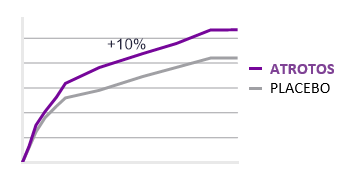
In controlled in-vitro studies, human fibroblasts exposed to ATROTOS demonstrated extended replicative lifespan compared to untreated controls. These findings indicate a senescence-delaying effect at the cellular level. By supporting healthier cellular aging dynamics, ATROTOS contributes to the maintenance of regenerative potential and functional cellular performance within a structured Healthy Aging & Longevity Platform.
Telomere Dynamics

ATROTOS — Telomere Stability Support

Telomere length is a validated biomarker of cellular aging and replicative capacity. Telomeres function as protective chromosomal end-structures and progressively shorten with each cell division. Accelerated telomere attrition is strongly associated with biological aging and with increased risk burden across multiple age-related conditions.

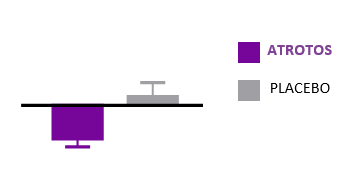
In controlled in-vitro studies using human fibroblasts, cells treated with ATROTOS did not demonstrate telomere shortening at the point of replicative senescence, compared with untreated controls. These findings support a telomere-stabilizing effect under experimental conditions. Preservation of telomere length is mechanistically aligned with healthier cellular aging trajectories and supports the Healthy Aging & Longevity Platform framework.
Proteostasis

ATROTOS — Proteasome Function Support

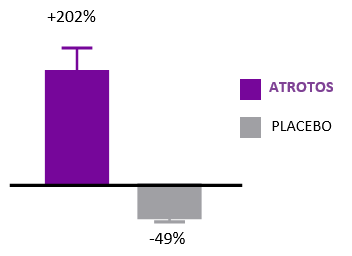
Proteostasis (protein homeostasis) is a core pillar of cellular function and longevity biology. With advancing age, cumulative oxidative and environmental stress reduces the efficiency of proteostasis networks, particularly the ubiquitin–proteasome system — the primary intracellular pathway for damaged and misfolded protein clearance (Nobel Prize, 2004). This functional decline is linked to the accumulation of dysfunctional proteins and to broader age-associated cellular impairment.

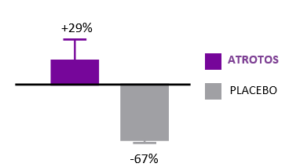
In controlled in-vitro studies in human fibroblasts, ATROTOS treatment was associated with increased proteasome activity and restoration of proteasome performance under age-related stress conditions. Experimental findings indicate activation of the proteasome pathway and mitigation of age-associated proteasome deterioration at the cellular level. These results support a proteostasis-supportive mechanism consistent with the Healthy Aging & Longevity Platform model.

Proteostasis & Oxidative Protein Damage

ATROTOS — Oxidized Protein Load Reduction Support

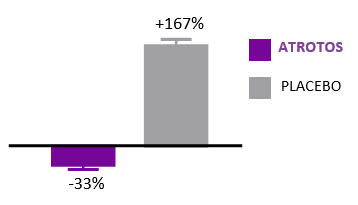
Age-related decline in proteostasis is closely associated with increased oxidative modification of cellular proteins. Oxidized proteins exhibit impaired structure and function and, when insufficiently cleared, contribute to progressive cellular dysfunction and aging-related biological burden.

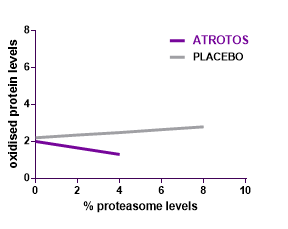
In controlled in-vitro studies in “aged” human fibroblasts, ATROTOS treatment was associated with reduced levels of oxidized proteins compared with untreated controls. Experimental data further demonstrate high antioxidant capacity and prevention of oxidized protein accumulation under cellular aging conditions. These findings support a proteostasis-protective and oxidative stress–modulating effect within the Healthy Aging & Longevity Platform framework.

Epigenetic Regulation

ATROTOS — Global DNA Methylation Stability Support

Epigenetic stability is a recognized hallmark of healthy cellular aging. With advancing age, global epigenetic regulation — including DNA methylation patterns — becomes progressively dysregulated, leading to altered gene expression profiles and reduced cellular functional consistency.

In controlled in-vitro studies across the cellular lifespan of human fibroblasts, ATROTOS-treated cells maintained global DNA methylation levels comparable to those observed in younger cell populations. These findings indicate preservation of epigenetic pattern stability under experimental aging conditions. Maintenance of global methylation status is mechanistically aligned with healthier gene expression control and supports functional cellular aging trajectories within the Healthy Aging & Longevity Platform model.

Deregulated Nutrient Sensing

ATROTOS — FoxO1 Pathway Activation Support

Deregulated nutrient sensing is a central hallmark of biological aging, affecting cellular energy management, metabolic signaling, and stress-response pathways. Age-related impairment of nutrient-sensing networks is associated with reduced metabolic adaptability and diminished cellular resilience.

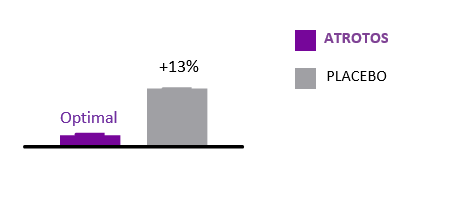
In controlled in-vitro studies in human fibroblasts across their replicative lifespan, treatment with ATROTOS was associated with activation of the FoxO1 pathway and increased FoxO1 transcriptional activity during cellular aging. FoxO1 is a key regulator of nutrient-sensing and stress-response gene networks. Enhanced FoxO1 activity under experimental aging conditions is mechanistically aligned with improved cellular adaptation and HealthSpan-supportive signaling within the Healthy Aging & Longevity Platform framework.

Deregulated Nutrient Sensing

ATROTOS — SIRT1 Pathway Activation Support

Nutrient-sensing pathways are core regulators of cellular metabolism, stress adaptation, and longevity biology. Age-associated dysregulation of these pathways contributes to impaired metabolic control, reduced stress tolerance, and progressive functional decline.

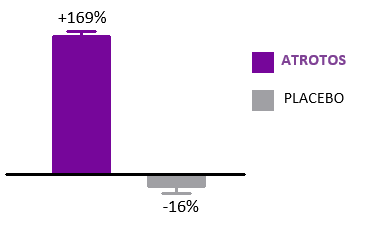
In controlled experimental models, ATROTOS demonstrated SIRT1 activation activity. SIRT1 is a central longevity-associated signaling regulator involved in metabolic control, cellular stress response, and inflammatory modulation. Activation of SIRT1 is mechanistically linked with improved metabolic regulation, enhanced cellular resilience, and longevity-associated signaling pathways within the Healthy Aging & Longevity Platform framework.

Clinical Study Design

The primary endpoint of the clinical study was the change in circulating oxidized plasma protein levels. Participants receiving ATROTOS demonstrated a statistically significant reduction in oxidized plasma proteins, whereas the placebo subgroup showed no measurable change in oxidation status over the same period. No safety concerns, adverse events, or unintended effects were recorded during the study.

The magnitude of the effect was more pronounced in participants aged 45–55 years and in female subjects. The observed reduction in oxidized protein burden is mechanistically consistent with enhanced proteasome-mediated protein degradation activity.

Clinical Effects of ATROTOS: In-Vivo Enhancement of Proteostasis Capacity

Evaluation

Reduction in Oxidized Protein Levels

ATROTOS demonstrates clinically measurable antioxidant activity in vivo. In a controlled human supplementation study, ATROTOS administration for three months was associated with a significant reduction in circulating oxidized protein levels in healthy volunteers, compared with baseline measurements. These findings support a systemic oxidative stress–modulating effect consistent with proteostasis support within a Healthy Aging & Longevity Platform framework.
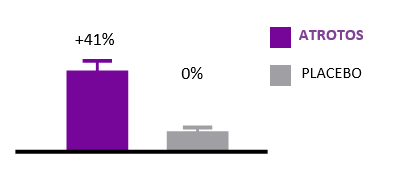
ATROTOS supports enhanced degradation of oxidized proteins through proteasome-mediated pathways. In a human supplementation study, the reduction in circulating oxidized protein levels after three months of use was accompanied by a measurable increase in proteasome activity in healthy volunteers. This biomarker pattern is consistent with improved protein quality-control capacity and proteostasis support within a Healthy Aging & Longevity Platform framework.


References

Athanasopoulou, S.; Kapetanou S.; Magouritsas M.G.; Mougkolia N.; Tsalouxidou P.; Papacharalambous M.; Sakellaridis F.; Gonos E. Antioxidant and Antiaging Properties of a Novel Synergistic Nutraceutical Complex: Readouts from an In Cellulo Study and an In Vivo Prospective, Randomized Trial. Antioxidants 2022, 11, 468.

Voutetakis, K.; Delitsikou, V.; Magouritsas, M.G.; Gonos, E.S. Anti-ageing properties of Khelma Longevity™: Treatment of human fibroblasts increases proteasome levels and decreases the levels of oxidized proteins. N. Biotechnol. 2017, 38, 36–39.

Kapetanou, M.; Nespital, T.; Tain, L.S.; Pahl, A.; Partridge, L.; Gonos, E.S. FoxO1 is a Novel Regulator of 20S Proteasome Subunits Expression and Activity. Front. Cell Dev. Biol. 2021, 9, 625715.

Mensa, E.; Latini, S.; Ramini, D.; Storci, G.; Bonafe, M.; Olivieri, F. The telomere world and aging: Analytical challenges and future perspectives. Ageing Res. Rev. 2019, 50, 27–42.